

Urgent Care That Accepts Medicare in Northwest Houston and Livingston, TX
If you’re looking for urgent care that accepts Medicare, Precise Urgent Care is a trusted option. Board-certified Dr. Rajan Popat, MD, and our team offer timely, affordable medical care for Medicare recipients, ensuring that you receive the treatment you need without the hassle of long wait times. Whether you need care for injuries, illnesses, or routine check-ups, we provide comprehensive services while accepting Medicare in Northwest Houston, Cypress, Willowbrook, and Jersey Village, as well as Livingston, TX. For more information, contact us or online check-in. We have convenient locations to serve you in Northwest Houston TX, and Livingston TX.
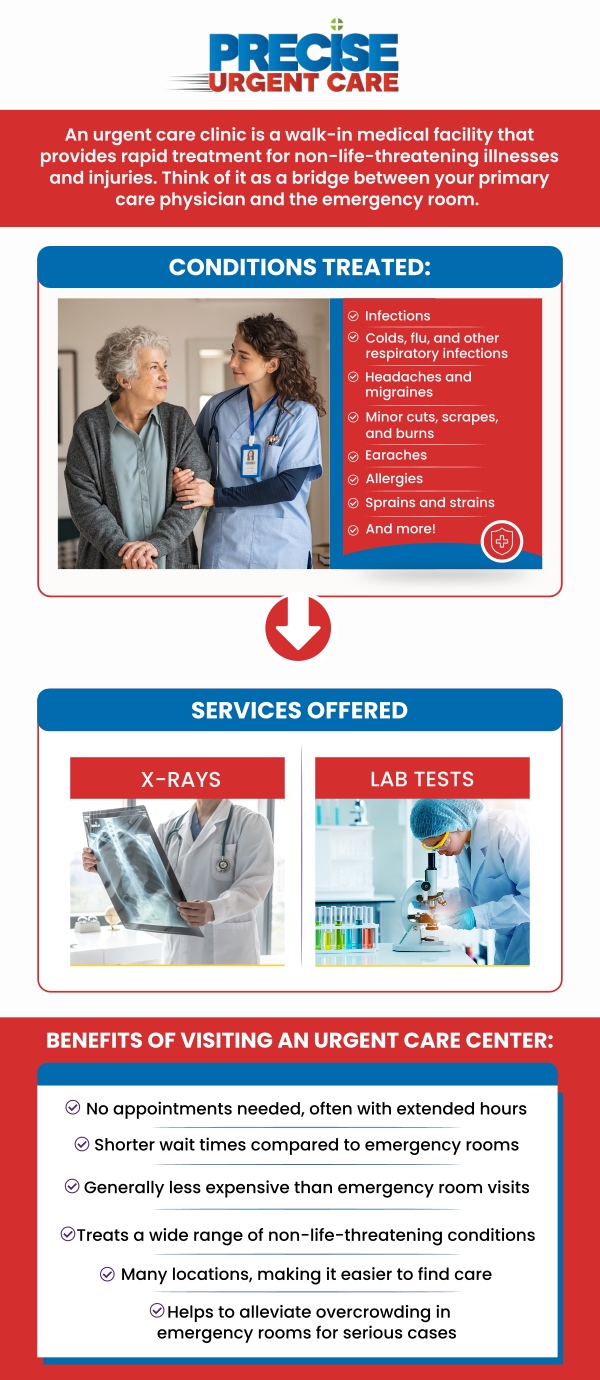
Table of Contents:
How to find an urgent care clinic that accepts Medicare?
When should I visit an urgent care clinic with Medicare?
What services at an urgent care clinic are covered by Medicare?
How much is my co-pay or co-insurance for an urgent care visit with Medicare?
What are the benefits of choosing an Urgent Care Clinic that accepts Medicare?
Finding an urgent care clinic that accepts Medicare is an essential step in ensuring you can access healthcare when you need it most. Here’s how you can find an urgent care clinic that accepts Medicare:
• Visit the Medicare Website: The first step is to go to the official Medicare website at www.medicare.gov. On the homepage, you’ll find a search tool that can help you find healthcare providers, including urgent care clinics, that accept Medicare.
• Use the ‘Physician Compare’ Tool: Medicare’s website offers a search tool called the “Physician Compare” tool, which allows you to find specific healthcare providers by location and specialty. You can search for urgent care centers or walk-in clinics by entering your zip code or city. If you are looking for an urgent care clinic that accepts Medicare in Livingston and Northwest Houston, TX, you can search for Dr. Rajan Popat, MD at Precise Urgent Care using this tool to find the clinic and verify it accepts Medicare.
• Call the Clinic: After identifying potential clinics through the Medicare website, it’s always a good idea to call the urgent care clinic directly to confirm that they accept Medicare. Some urgent care centers may not advertise their acceptance of Medicare, or they may have specific conditions.
• Check with Your Medicare Advantage Plan: If you have a Medicare Advantage plan, you may need to check with your specific plan to see which urgent care centers are in-network. Many Medicare Advantage plans offer a directory of in-network providers on their websites or can help you over the phone.
• Look for ‘Medicare Participating’ Signs: Many urgent care centers display signs that show they accept Medicare, so keep an eye out for these when looking for a clinic. You can also ask for this information when making an appointment or while inquiring about services.
At Precise Urgent Care, Dr. Rajan Popat, MD, and our team accept Medicare, ensuring that you have access to high-quality, affordable healthcare when you need it most. By following these steps, you can find a Medicare-accepted urgent care clinic near you for prompt and efficient care.
You should visit an urgent care clinic with Medicare when you need immediate medical care but do not require the extensive resources of an emergency room. Urgent care clinics are perfect for situations where your health concerns are not life-threatening but still require prompt attention.
Here are a few situations when it is appropriate to visit an urgent care clinic:
• Non-life-threatening injuries: If you have minor injuries such as sprains, strains, minor cuts, or bruises, an urgent care center is a good option. These injuries don’t require an emergency room visit, but they still need medical attention.
• Flu-like symptoms: If you have flu symptoms, a cold, sore throat, or cough, an urgent care clinic can help diagnose and treat these conditions. Since flu symptoms can escalate, it’s essential to get checked promptly to avoid worsening symptoms.
• Infections: Urgent care centers are equipped to treat infections like ear infections, urinary tract infections (UTIs), or skin infections, offering prescriptions and necessary care to manage the condition.
• Minor breathing issues: Conditions like asthma attacks or shortness of breath that are not life-threatening but require attention can be managed in urgent care clinics.
• Physical exams: Some urgent care clinics offer services such as physical exams, sports physicals, and basic health screenings, which can be especially helpful if you need them quickly.
• No appointment needed: If you’re dealing with a health issue and don’t want to wait for an appointment with your primary care physician, urgent care centers often offer walk-in services without the need for a prior appointment.
Urgent care clinics are ideal for addressing these medical concerns when they arise, especially if you’re a Medicare recipient. You can expect quick, convenient, and cost-effective care, so you don’t have to wait for an appointment with your regular doctor or go to the emergency room for minor issues.
Medicare covers a variety of urgent care services that allow Medicare recipients to access affordable, timely medical attention. However, the specific services covered depend on your Medicare plan.
• Evaluation and management: Basic medical evaluations, such as a physical exam and diagnosis, are typically covered under Medicare Part B. This includes services like consultations, health assessments, and the treatment of non-emergency injuries or illnesses.
• Injury care: Medicare covers treatment for injuries such as sprains, fractures, cuts, and burns, as long as they are not severe enough to require an emergency room visit. Urgent care centers can treat these injuries with proper medical care, such as bandaging, splints, or stitches.
• Laboratory services: Medicare will cover laboratory services at an urgent care clinic that are deemed medically necessary. This includes testing for infections, diabetes screening, and other basic diagnostic tests, such as blood or urine tests.
• Immunizations and vaccines: Certain vaccines, including flu shots and pneumonia vaccines, are covered by Medicare. Many urgent care centers offer these immunizations, making it easy for Medicare recipients to stay up-to-date on their vaccinations.
• X-rays and imaging: Some urgent care centers provide basic imaging services like X-rays. Medicare Part B will typically cover medically necessary X-rays performed at an urgent care clinic to diagnose fractures, infections, or other conditions.
• Injections and medications: Medicare will cover the administration of medications and injections at urgent care clinics, as long as they are medically necessary for your treatment. This could include pain management injections, antibiotics, or other treatments prescribed by the healthcare provider.
• Treatment for common illnesses: Medicare also covers treatment for common illnesses such as respiratory infections, sinus infections, allergies, sore throats, and urinary tract infections (UTIs) when treated at an urgent care center.
It’s important to note that coverage might differ based on your Medicare Advantage plan or whether you are receiving care in-network or out-of-network. Always check with your Medicare plan to verify the specific services covered by urgent care centers.
The co-pay or co-insurance for an urgent care visit with Medicare depends on a few factors, including your specific Medicare plan and the services you receive during your visit. For those with Medicare Part B, the general guidelines for co-pays and co-insurance are as follows:
• Medicare Part B: Under Medicare Part B, after you meet your annual deductible, you are generally responsible for 20% of the Medicare-approved amount for outpatient services, including urgent care visits. This means that after the deductible, you will pay 20% of the cost for most services rendered at the urgent care center, while Medicare covers the remaining 80%.
• Medicare Advantage (Part C): If you have a Medicare Advantage plan, your co-pay may vary depending on the specifics of your plan. Some plans have a fixed co-pay for urgent care visits, which can range from $10 to $50 per visit. It’s important to check your plan’s details, as the cost can differ based on whether the urgent care center is in-network or out-of-network.
• Co-pay for specific services: In addition to your co-pay for the visit itself, you may also need to pay for any additional services you receive at the urgent care center, such as X-rays, lab tests, or prescriptions. Your co-insurance for these services is typically 20% of the Medicare-approved amount, unless you have a Medicare Advantage plan with different co-pays for these specific services.
• Deductibles: Medicare Part B has an annual deductible that must be met before Medicare starts paying for outpatient services, including urgent care visits. As of 2023, the deductible for Medicare Part B is $226 per year. Once this deductible is met, you are responsible for 20% of the Medicare-approved cost for services rendered.
It’s important to contact your urgent care provider before your visit to confirm the estimated costs, especially if you have a Medicare Advantage plan. Additionally, if you are unsure about your coverage or co-pay responsibilities, you can always reach out to Medicare directly or your Medicare Advantage plan for clarification.
Choosing an urgent care clinic that accepts Medicare offers several benefits for Medicare recipients, ensuring that they can receive timely and affordable care when needed. Some of the key benefits include:
• Convenience and Accessibility: Urgent care clinics that accept Medicare provide an easily accessible healthcare option without requiring an appointment. This is especially beneficial for non-life-threatening medical issues that require immediate attention but don’t warrant a trip to the emergency room. With flexible hours and walk-in availability, Medicare recipients can seek care at their convenience.
• Lower Costs than Emergency Rooms: Urgent care visits generally cost less than emergency room visits. For Medicare recipients, this means you’ll pay less out-of-pocket for non-emergency services, which helps you avoid unnecessary costs while still receiving quality care.
• Comprehensive Services: Many urgent care centers that accept Medicare provide a wide range of services, including diagnostic tests, immunizations, treatment for injuries, and management of minor illnesses. By offering such a variety of services, urgent care clinics ensure that Medicare recipients have access to the care they need without having to visit multiple providers.
• Faster Care: Urgent care centers are designed to provide quick treatment for common medical conditions. With fewer patients and shorter wait times compared to emergency rooms, Medicare recipients can receive fast, efficient care for minor health issues. This helps reduce the strain on emergency rooms and ensures you get the care you need promptly.
By choosing an urgent care clinic that accepts Medicare, you are taking advantage of a convenient, cost-effective, and accessible healthcare solution that ensures you get the treatment you need promptly. For more information, contact us or online check-in. We have convenient locations to serve you in Northwest Houston TX, and Livingston TX. We serve patients from Livingston TX, Houston TX, West Livingston TX, Klein TX, Cypress TX, Willowbrook TX, Onalaska TX, Tomball TX, Vintage Park TX and surrounding areas.

Check Out Our 5 Star Reviews


Additional Services You May Need
▸ Urgent Care
▸ Injury
▸ Fever
▸ Dehydration
▸ Vomiting
▸ Diarrhea
▸ Allergies
▸ Rashes
▸ Ear Pain
▸ Pre-Employment Physical
▸ DOT Physicals
▸ Sports Physicals
▸ STD/STI Testing
▸ Shockwave Therapy OmniWave

Additional Services You May Need
▸ Urgent Care
▸ Injury
▸ Fever
▸ Dehydration
▸ Vomiting
▸ Diarrhea
▸ Allergies
▸ Rashes
▸ Ear Pain
▸ Pre-Employment Physical
▸ DOT Physicals
▸ Sports Physicals
▸ STD/STI Testing
▸ Eye Redness / Pain
▸ Back Pain
▸ Mild Head Injuries
▸ Urine Infections (UTI)
▸ Cough
▸ Sore Throat
▸ Sinus
▸ Asthma
▸ Stitches
▸ Drug Screening
▸ Tuberculosis Testing (PPD)
▸ EKG Testing
▸ Ear Wax Removal
▸ Laceration Repair
▸ Burns
▸ Abscesses
▸ Fish Hook & Splinter Removal
▸ Splinting
▸ Back Injury
▸ Fractures
▸ Sprains & Strains
▸ Workers’ Compensation
▸ X-Ray
▸ Vaccinations
▸ IV Therapy
▸ School Physical
▸ Shockwave Therapy OmniWave


 Send Text
 How May I Help You?