

Asthma Treatment in Livingston, TX
Asthma can cause wheezing, coughing, chest tightness, and shortness of breath that may interfere with daily activities. Timely evaluation can help identify possible triggers, assess symptom severity, and determine the appropriate level of care. At Precise Urgent Care, Board-Certified Dr. Rajan Popat, MD, and our team provide personalized asthma treatment in Livingston, TX. Our clinic focuses on responsive care, clear guidance, and helping patients manage breathing concerns with confidence. For more information, contact us or use online check-in. We are conveniently located at 1501 W Church St, #800 Livingston, TX 77351.
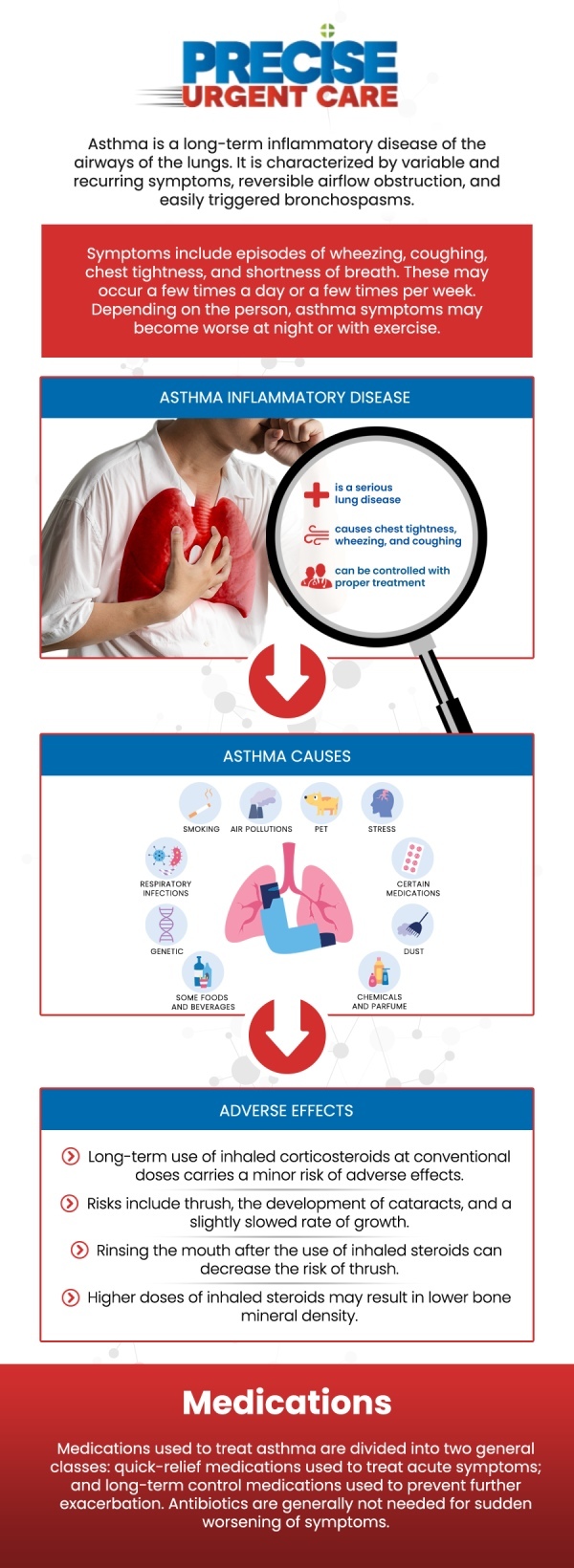
Table of Contents:
What is asthma, and how does it affect the body?
What are the common symptoms of asthma?
What causes asthma attacks?
How can I manage my asthma effectively?
What Makes Precise Urgent Care a Trusted Choice for Asthma Care in Livingston, TX?
Asthma is a chronic respiratory condition that affects the airways responsible for carrying air into and out of the lungs. In people with asthma, these airways can become inflamed, swollen, and unusually sensitive. When symptoms are triggered, the muscles surrounding the airways may tighten while the airway lining produces additional mucus. Together, these changes make the airways narrower and can make normal breathing more difficult.
Asthma can affect people differently. Some experience occasional symptoms that appear only after exposure to a particular trigger, while others may have recurring breathing problems that interfere with sleep, exercise, work, or daily activities. The intensity of symptoms can also change over time. A person may feel well for long periods and then develop a sudden flare when exposed to allergens, respiratory infections, weather changes, smoke, or other irritants.
Although asthma is a long-term condition, proper evaluation and management can help many people control their symptoms and remain active. Our team can assess breathing concerns, review symptoms and potential triggers, and determine whether urgent treatment is appropriate. Anyone experiencing severe breathing difficulty, bluish lips or face, confusion, or rapidly worsening symptoms should seek emergency medical assistance immediately.
Asthma symptoms occur when inflammation and narrowing of the airways interfere with normal airflow. One of the most recognizable symptoms is wheezing, which may sound like a high-pitched or whistling noise during breathing. Shortness of breath, chest tightness, and persistent coughing are also common. Some people notice that coughing becomes worse at night, early in the morning, during exercise, or after exposure to cold air.
Symptoms can vary significantly from one person to another. Some individuals primarily experience coughing, while others develop noticeable wheezing or difficulty catching their breath. An asthma flare may develop gradually over several hours or days, but symptoms can sometimes worsen quickly. Recognizing changes in breathing patterns can help people seek appropriate medical attention before symptoms become more serious.
It is especially important to pay attention when symptoms begin occurring more frequently, interfere with normal activities, disrupt sleep, or become harder to control. At Precise Urgent Care in Livingston, TX, our team evaluates respiratory symptoms to help determine their possible cause and the level of care needed. Because coughing and shortness of breath can also occur with respiratory infections and other medical conditions, a professional evaluation can help clarify what may be contributing to the symptoms.
An asthma attack occurs when the airways become increasingly inflamed and narrowed, making it harder for air to move through the lungs. Attacks are often connected to specific triggers, although triggers are different for every person. Learning what tends to bring on symptoms is an important part of maintaining better asthma control and reducing unnecessary exposure whenever possible.
Common asthma triggers may include:
• Pollen, mold, dust mites, or pet dander
• Smoke and other airborne irritants
• Respiratory infections such as colds
• Exercise, especially in cold or dry air
• Sudden weather or temperature changes
• Strong fragrances or chemical fumes
• Air pollution
• Emotional stress or intense emotions
• Workplace dust, chemicals, or environmental exposures
Having a trigger does not necessarily mean symptoms will occur every time exposure happens. The severity of an attack can depend on airway sensitivity, overall asthma control, duration of exposure, and other health factors. Our clinic encourages patients to become familiar with their individual patterns, including where they were, what they were doing, and what exposures occurred before symptoms developed. Sudden or severe difficulty breathing requires emergency care, especially when a person cannot speak comfortably, symptoms are rapidly worsening, or there are signs of inadequate oxygen.
Effective asthma management usually begins with understanding your symptoms, identifying potential triggers, and following the treatment plan recommended by your healthcare professional. Because asthma patterns can change, paying attention to when symptoms appear and how frequently they occur can provide useful information. Keeping track of coughing, wheezing, chest tightness, nighttime symptoms, exercise limitations, and known exposures may help identify patterns that need further evaluation.
Reducing exposure to known triggers can also support better symptom control. Depending on individual sensitivities, this may involve keeping indoor environments free from smoke, addressing dust or mold, monitoring outdoor air quality, limiting exposure to strong chemical odors, or adjusting strenuous outdoor activity when environmental conditions are unfavorable. Healthy lifestyle habits, including appropriate physical activity, sufficient sleep, and management of respiratory illnesses, can also support overall respiratory health.
Asthma management should be personalized because symptoms and triggers are not identical for every patient. Our team at Precise Urgent Care can evaluate worsening asthma symptoms and determine whether additional care is needed. Patients should also understand the warning signs that require emergency attention. Severe breathlessness, difficulty speaking because of shortness of breath, faintness, confusion, blue or gray coloration around the lips, or symptoms that continue to worsen despite usual measures should be treated as a medical emergency.
When asthma symptoms suddenly worsen, convenient access to medical evaluation can be especially important. Patients may develop increasing coughing, wheezing, chest tightness, or shortness of breath and need help determining whether they are experiencing an asthma flare or another respiratory problem. Urgent care can provide timely assessment for non-life-threatening breathing concerns while helping patients understand when a higher level of emergency care is necessary.
Quality asthma care also involves looking beyond a single symptom.Board-Certified Dr. Rajan Popat, MD, and our team consider each patient’s breathing concerns, symptom pattern, possible triggers, medical history, and overall condition. Evaluating the full clinical picture can help distinguish asthma-related symptoms from respiratory infections, allergies, or other conditions that may produce similar signs. We focus on clear communication so patients understand their symptoms, recommended care, and signs that should prompt immediate emergency attention.
At Precise Urgent Care in Livingston, TX, Board-Certified Dr. Rajan Popat, MD, and our team provide accessible care for patients experiencing asthma symptoms and other respiratory concerns. Our clinic is committed to attentive, respectful, and individualized care while helping patients feel informed about their respiratory health. Whether symptoms have recently appeared or an established asthma condition has begun to worsen, we can assess the situation and guide patients toward appropriate next steps. For life-threatening breathing difficulty or rapidly worsening respiratory distress, patients should call 911 or seek emergency medical care immediately. For more information, contact us or use online check-in. We are conveniently located at 1501 W Church St, #800 Livingston, TX 77351. We serve patients from Livingston TX, West Livingston TX, Goodrich TX, West Tempe TX, Onalaska TX, Shepherd TX and surrounding areas.

Check Out Our 5 Star Reviews


Additional Services You May Need
▸ Urgent Care
▸ Injury
▸ Fever
▸ Dehydration
▸ Vomiting
▸ Diarrhea
▸ Allergies
▸ Rashes
▸ Ear Pain
▸ Pre-Employment Physical
▸ DOT Physicals
▸ Sports Physicals
▸ STD/STI Testing
▸ Shockwave Therapy OmniWave

Additional Services You May Need
▸ Urgent Care
▸ Injury
▸ Fever
▸ Dehydration
▸ Vomiting
▸ Diarrhea
▸ Allergies
▸ Rashes
▸ Ear Pain
▸ Pre-Employment Physical
▸ DOT Physicals
▸ Sports Physicals
▸ STD/STI Testing
▸ Eye Redness / Pain
▸ Back Pain
▸ Mild Head Injuries
▸ Urine Infections (UTI)
▸ Cough
▸ Sore Throat
▸ Sinus
▸ Asthma
▸ Stitches
▸ Drug Screening
▸ Tuberculosis Testing (PPD)
▸ EKG Testing
▸ Ear Wax Removal
▸ Laceration Repair
▸ Burns
▸ Abscesses
▸ Fish Hook & Splinter Removal
▸ Splinting
▸ Back Injury
▸ Fractures
▸ Sprains & Strains
▸ Workers’ Compensation
▸ X-Ray
▸ Vaccinations
▸ IV Therapy
▸ School Physical
▸ Shockwave Therapy OmniWave


 Send Text
 How May I Help You?